How to Become a Tree Surgeon in the UK: The Ultimate Career Guide
If you’ve ever watched a team of professional tree surgeons carefully dismantling a mature oak over a conservatory, carrying out a precision crown reduction, or moving effortlessly through the canopy using ropes and harnesses, you’ve probably asked yourself…
“How do you actually become a tree surgeon?”
It’s one of the most common questions we’re asked at Ground Up Training.
The good news is that there has never been a better time to enter the arboriculture industry.
Across the UK, skilled tree surgeons are in high demand. Local authorities, utility companies, commercial contractors, estates and private homeowners all rely on qualified arborists to safely manage trees. As experienced professionals retire and demand continues to grow, opportunities for people entering the profession have never been stronger.
Whether you’re leaving school, changing careers or simply looking for a profession that gets you outdoors instead of behind a desk, tree surgery offers something very few careers can…
Every day is different.
One morning you could be carrying out a sympathetic reduction on a veteran oak.
The next, you could be dismantling a storm-damaged tree over a greenhouse.
No two trees are the same.
No two sites are the same.
And no two days are ever the same.
If you’re wondering how to become a tree surgeon, this guide will take you through every stage of the journey—from complete beginner to confident, qualified arborist.
What Does a Tree Surgeon Actually Do?
Before looking at qualifications, it’s worth understanding what a modern tree surgeon actually does.
Many people imagine tree surgery is simply cutting down trees.
In reality, professional arboriculture combines practical skill, technical knowledge, planning, communication and a strong understanding of safety.
Professional tree surgeons regularly carry out:
- Tree removals
- Crown reductions
- Crown thinning
- Crown lifting
- Deadwood removal
- Tree planting
- Tree inspections
- Emergency storm work
- Technical rigging operations
- Woodland management
- Machinery operation
- Habitat creation
- Veteran tree management
Modern arborists are responsible not only for carrying out work safely but also for protecting trees wherever possible.
A great tree surgeon understands tree biology just as well as chainsaw operation.
Why More People Are Choosing Tree Surgery as a Career
After training hundreds of arborists over the years, we’ve noticed something interesting.
Very few people enter the industry because they simply want to use a chainsaw.
Most join because they’re looking for something more rewarding.
Tree surgery offers benefits that are becoming increasingly rare in modern careers.
Work Outdoors Every Day
Instead of spending your working life behind a computer, you’re working in parks, gardens, estates, woodlands and forests.
Every season presents different challenges.
Many professional arborists say this variety is one of the biggest reasons they still love the job years later.
Learn Practical Skills That Last a Lifetime
Professional tree surgery training teaches far more than chainsaw skills.
You’ll develop knowledge in:
- Chainsaw operation
- Tree climbing
- Rigging
- Risk assessment
- Machinery operation
- Team communication
- Tree identification
- Problem solving
- Planning safe dismantles
These are practical skills that continue developing throughout your career.
Every Day Presents a New Challenge
Unlike many careers where each day feels repetitive, no two tree surgery jobs are ever identical.
Different trees.
Different weather.
Different customers.
Different equipment.
Different challenges.
For people who enjoy solving problems and working outdoors, it’s an incredibly rewarding profession.
Excellent Career Progression
Tree surgery offers genuine opportunities to progress.
Many arborists go on to become:
- Lead Climbers
- Contract Managers
- Utility Arborists
- Tree Surveyors
- Trainers
- Consultants
- Business Owners
Some even specialise in veteran tree management, technical rigging or consultancy work.
🌲 Ground Up Career Advice
One of the biggest misconceptions we hear is that climbing is the most important skill.
It isn’t.
After training hundreds of candidates, we’ve found the people who become the best climbers are almost always those who first become excellent groundsmen.
Learning communication, understanding how experienced climbers work, watching rigging operations and mastering chainsaw techniques builds a foundation that lasts throughout your entire career.
Don’t rush the process.
Master each stage.
Do You Need Qualifications to Become a Tree Surgeon?
The simple answer is yes.
Although it’s possible to begin working within the industry as a groundsman, employers increasingly expect candidates to hold recognised qualifications before operating chainsaws or carrying out aerial work.
Professional qualifications demonstrate that you understand:
- Safe working practices
- Chainsaw operation
- Tree felling
- Risk assessment
- Industry legislation
- Emergency procedures
More importantly, they help keep both you and your team safe.
Professional tree surgery isn’t about taking risks.
It’s about managing them professionally.
If you’d like to understand the qualification pathway in more detail, we recommend reading our guide:
What Qualifications Do You Need to Be a Tree Surgeon?
(Link to the previous blog.)
Step One – Start with Professional Chainsaw Training
Every professional arborist starts somewhere.
For almost everyone entering the industry, that journey begins with Chainsaw Training Courses.
https://groundup-training.com/chainsaw-training-courses/
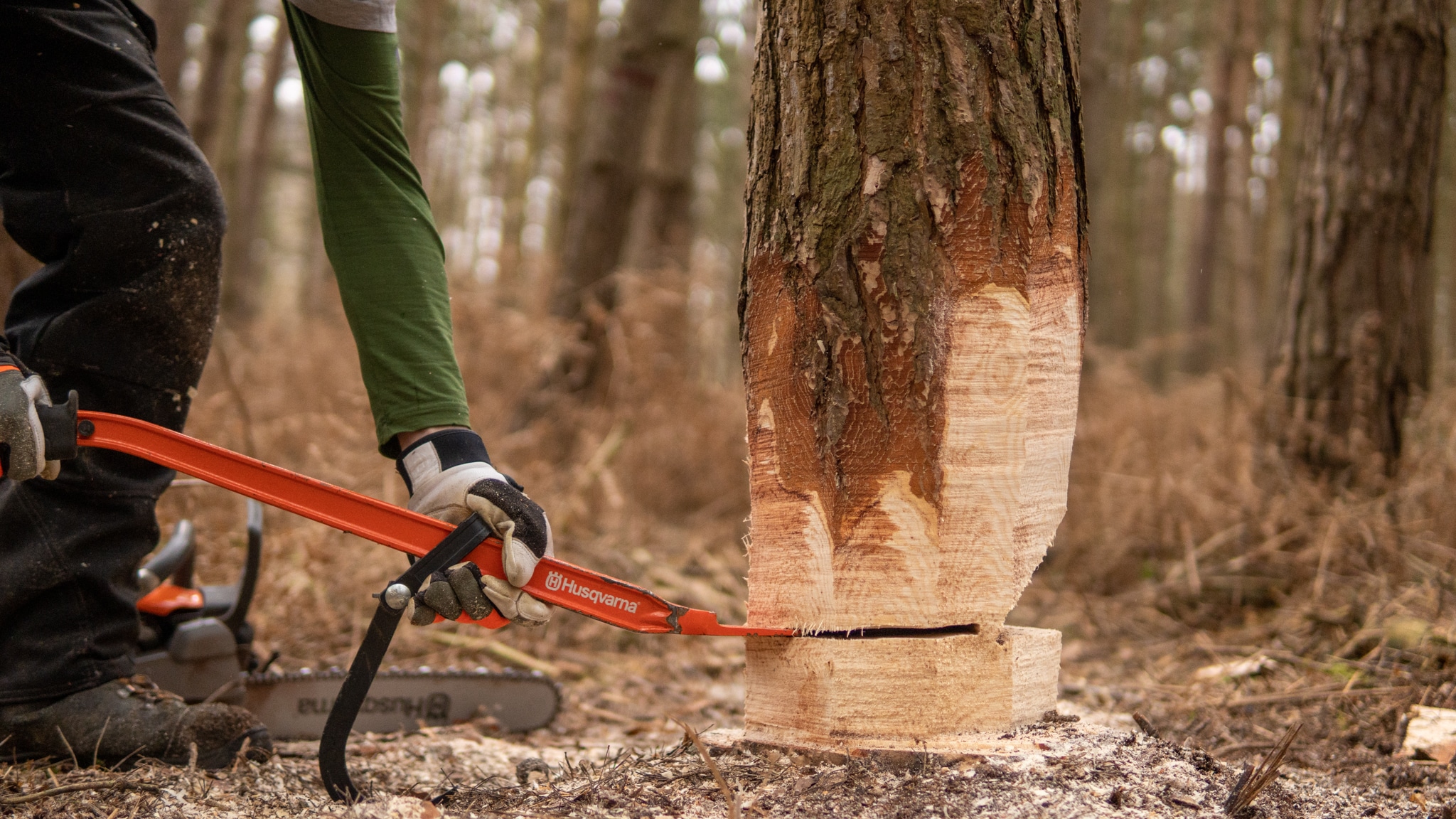
For most beginners, the ideal starting point is the Ground Based Chainsaw Operator Course, which combines the essential skills taught in CS30 and CS31 Felling Trees up to 380mm.
Ground Based Chainsaw Operator Course
https://groundup-training.com/chainsaw-training-courses/ground-based-chainsaw-operator-course/
CS31 Felling Trees up to 380mm Course
https://groundup-training.com/chainsaw-training-courses/felling-trees-up-to-380mm-course/
These qualifications teach the foundations every professional arborist needs before progressing into climbing.
You’ll learn:
- Chainsaw maintenance
- Safe starting procedures
- Cross-cutting timber
- Directional felling
- Hinge wood control
- Hung-up tree techniques
- Timber processing
- Industry legislation
- Daily inspections
- Risk assessments
These aren’t simply qualifications to tick off.
They’re skills you’ll rely on every single day throughout your career.
Many experienced arborists still say that developing excellent chainsaw technique early on was one of the best investments they ever made.
Why Getting the Fundamentals Right Matters
It’s tempting to look ahead to climbing and aerial chainsaw work.
But successful careers are built on strong foundations.
Every qualification builds upon the last.
That’s why taking the time to learn proper techniques early on pays dividends throughout your career.
At Ground Up Training, we focus on producing competent arborists—not simply helping candidates pass assessments.
Our goal is to develop professionals who leave training with the confidence, practical ability and understanding to work safely in the real world.
The next stage of your journey is learning to climb, work safely at height and eventually develop into a fully qualified climbing arborist.
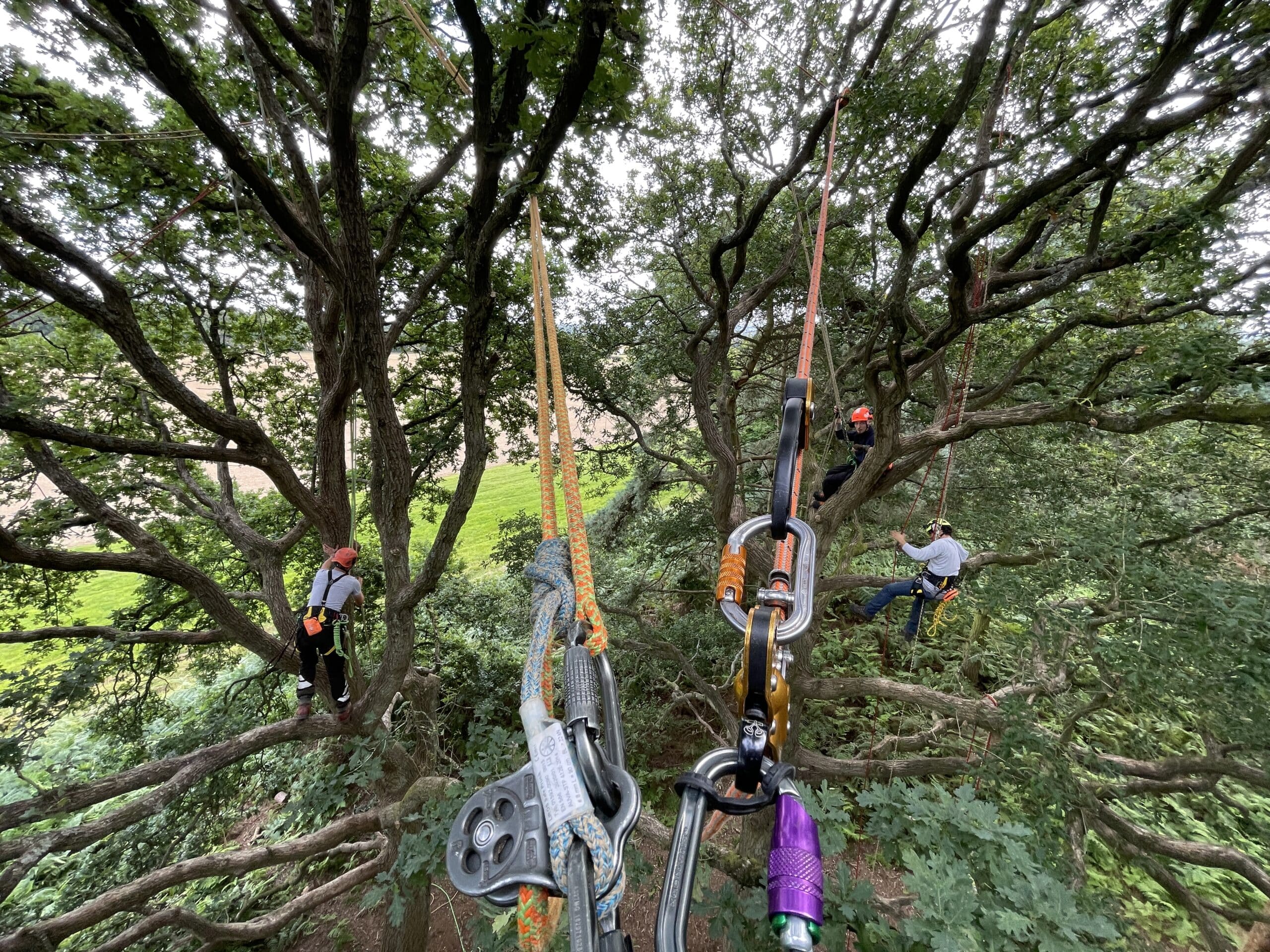
Step Two – Learn to Climb Trees Safely
Once you’ve mastered the fundamentals of chainsaw operation and ground-based tree work, the next stage of your journey is one of the most exciting — climbing.
For many people considering how to become a tree surgeon, climbing is the skill that first attracted them to the profession. Working high in the canopy, moving confidently through the branches and carrying out precision tree work is incredibly rewarding, but it’s also where professional training becomes even more important.
Tree climbing isn’t simply about getting to the top of a tree.
It’s about understanding rope systems, selecting safe anchor points, positioning yourself correctly, planning rescues, and working efficiently while protecting both yourself and the tree.
That’s why one of the most important qualifications in your career is the CS38 Tree Climbing & Aerial Rescue Course.
CS38 Tree Climbing & Aerial Rescue Course
https://groundup-training.com/tree-surgeon-courses/tree-surgery-aerial-training-courses/tree-climbing-aerial-rescue-course/
Step Three – Using a Chainsaw in the Tree
After becoming confident climbing, the next stage is learning to operate a chainsaw safely while suspended from a rope and harness.
This is where the CS39 Chainsaw from Rope & Harness Course becomes essential.
CS39 Chainsaw from Rope & Harness Course
https://groundup-training.com/tree-surgeon-courses/tree-surgery-aerial-training-courses/chainsaw-from-rope-and-harness-course/
During this qualification you’ll learn how to:
- Carry out aerial cutting safely
- Maintain secure work positioning
- Manage saw handling at height
- Understand cutting techniques in the canopy
- Minimise unnecessary movement
- Work efficiently while maintaining complete control
Step Four – Learning Advanced Rigging
As your confidence and experience grow, you’ll begin tackling larger, more technical tree dismantles.
This is where rigging becomes one of the most valuable skills an arborist can develop.
Professional rigging allows sections of timber to be lowered safely where free-felling simply isn’t an option.
Whether you’re working above conservatories, greenhouses, roads or valuable gardens, understanding how forces travel through ropes, pulleys and anchor points becomes critical.
Our Aerial Tree Rigging Course develops these advanced skills, helping arborists understand not only how to rig safely, but why different systems behave the way they do.
Aerial Tree Rigging Course
https://groundup-training.com/tree-surgeon-courses/tree-surgery-aerial-training-courses/aerial-tree-rigging-course/
As we’ve discussed in our article explaining the RR668 Rigging Research, successful rigging isn’t about memorising numbers.
RR668 Rigging Research Explained
Step Five – Machinery Qualifications
Tree surgery today involves far more than climbing and chainsaws.
Professional arborists regularly operate machinery including:
- Wood chippers
- Stump grinders
- MEWPs
- Forestry equipment
- Winches
- Other specialist arboricultural machinery
Developing competence with machinery not only improves your efficiency but also makes you significantly more valuable to employers.
Our Machinery Training Courses are designed to help arborists build confidence using equipment safely, professionally and in accordance with industry best practice.
Training Courses
https://groundup-training.com/tree-surgeon-courses/machinery-training-courses/
The Fastest Route to Becoming a Tree Surgeon
One question we’re regularly asked is:
“What’s the quickest way to become qualified?”
The honest answer?
Follow a structured pathway.
Many candidates initially look at booking courses individually.
However, taking qualifications in the correct order saves both time and money while ensuring every course builds naturally on the previous one.
That’s exactly why we’ve created our Arborist Training Packages.
Arborist Training Packages
https://groundup-training.com/tree-surgeon-courses/training-packages/
What Our Students Say
We’re incredibly proud of the reputation we’ve built at Ground Up Training, and nothing reflects that better than the feedback from our students.
Ground Up Training
https://groundup-training.com
Final Thoughts
If you’re still asking yourself “How do I become a tree surgeon?”, hopefully you now have a much clearer picture of the journey ahead.
Like any skilled profession, it starts with learning the fundamentals, building experience and developing confidence one step at a time.
At Ground Up Training, we’ve helped hundreds of people take that first step, whether they’re leaving school, changing careers or looking to build on existing experience.
Ground Up Training
https://groundup-training.com
Our advice is simple.
Don’t chase qualifications.
Chase competence.
The qualifications will follow naturally, and the career opportunities will come with them.
If you’re ready to begin your journey, explore our Arborist Training Packages and let us help you build a career you’ll be proud of.
Arborist Training Packages
https://groundup-training.com/tree-surgeon-courses/training-packages/